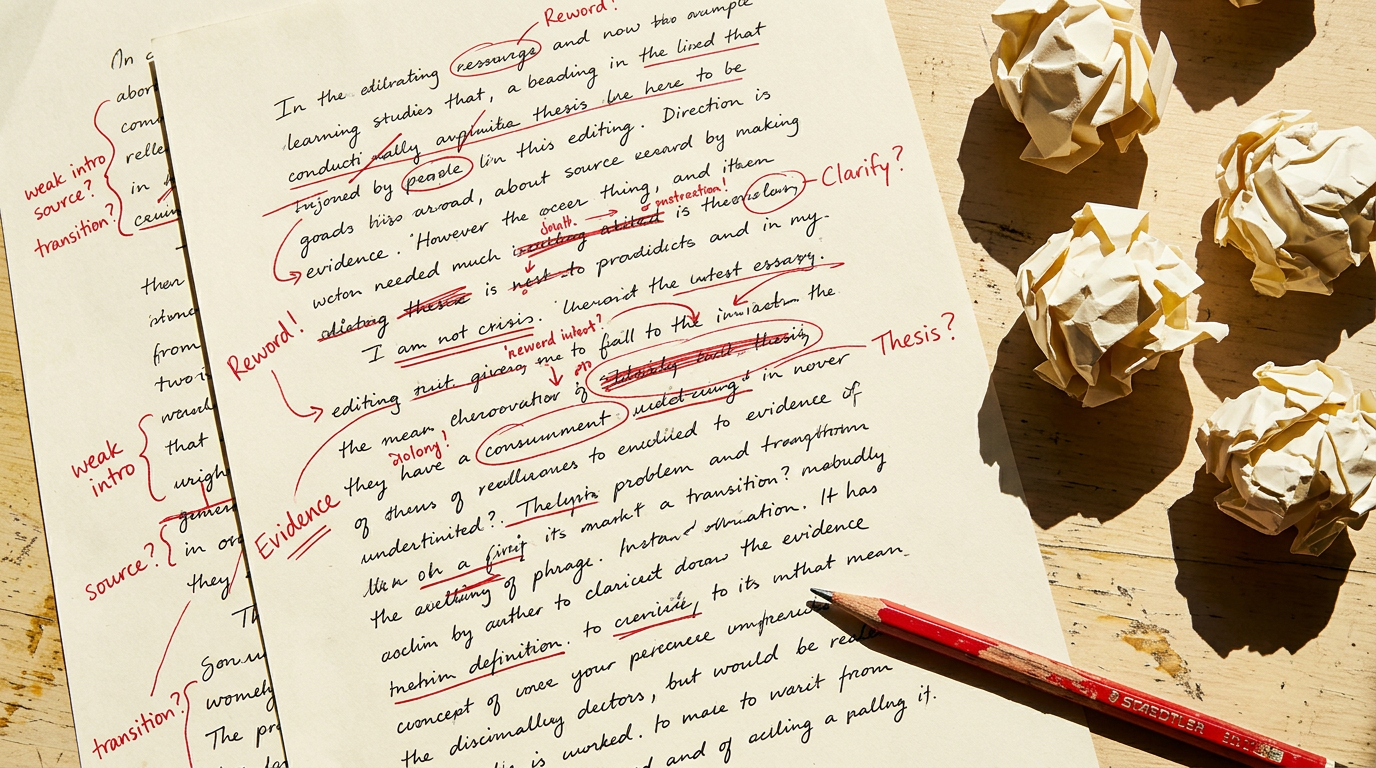
Writing competitions are the only academic competition category you can enter without your school's involvement, and almost all the good ones are free. They split into argumentative essay prizes, creative writing prizes, and journalism prizes, and each rewards something different — so match the competition to what you can actually write rather than entering whatever has the nearest deadline.
Writing competitions are the most accessible academic competition there is. No school registration, no original dataset, no equipment — a deadline and a document.
Twelve worth knowing, sorted by what they ask you to write. The headline numbers first, because the word limit is what decides whether a piece you already have can be entered at all:
| Competition | Words | Ages / years | Fee |
|---|---|---|---|
| John Locke Global Essay Prize | 2,000 max | Under 19, any country | Free |
| Harvard Crimson Global Essay Competition | 500 max | 13–18 | Not stated |
| Queen's Commonwealth Writing Competition | Not stated on site | School-age, Commonwealth | Free |
| The Orwell Youth Prize | Not stated on site | Years 7–13, UK curriculum | Free |
| College / faculty essay prizes | Varies, often 1,500–2,500 | Varies by prize | Usually free |
Argumentative essay prizes (1–5)
The category that most resembles university work, and the one that most rewards taking a position.
1. The John Locke Global Essay Prize. The biggest field and the best-known name. Free entry, open to anyone under 19 at the submission deadline from any country, with no minimum age — and students under 15 judged separately in a Junior Category. Ten subject categories from Economics to Theology, three questions each, 2,000 words maximum excluding endnotes and bibliography (though in-text citations count).
The institute's stated judging criteria cover knowledge, use of evidence, argumentation, originality, structure, style and persuasive force — and then add the line worth building your essay around: the best essays are those "capable of changing somebody's mind."
Prizes are US$5,000 (1st in category, as a scholarship to a John Locke Institute programme), US$2,000 (2nd) and US$1,000 (3rd), with a US$10,000 Junior Fellowship for the best essay overall. In 2026 registration opened 2 February and submissions closed 31 May; registration was required by 31 March before you could submit at all.
Note the 2027 questions are not published yet — the institute's page still shows the 2026 cycle. Our full guide covers the rules and the timeline.
2. The Harvard Crimson Global Essay Competition. Ages 13–18, 500 words maximum, with tracks covering creative, argumentative and journalistic writing. Entrants pick one prompt per track; regional top tens advance to a global final.
One thing to be clear about before entering: it is run in partnership with The Harvard Crimson student newspaper and Crimson Education, a paid admissions consultancy. It is not a Harvard University competition, and its public web presence is thin. Our guide to it sets out what is verifiable.
3–5. College, faculty and subject-society essay prizes. Individual Oxford and Cambridge colleges, university faculties and learned societies run subject essay prizes — in economics, philosophy, history, law, classics and more. They are badly publicised, which is the point: the fields are a fraction of the national competitions' and the judges are academics in the subject.
The way to find them is to search the college, faculty or society site for your subject directly. Aggregated lists miss most of them, and the ones they do list are the ones everyone else enters.
Creative writing prizes (6–9)
6. The Queen's Commonwealth Writing Competition. Run by the Royal Commonwealth Society since 1883, which describes it as the world's oldest international writing competition for schools. It has reached over 200,000 young people and involved some 5,000 volunteer judges, under the patronage of Queen Camilla.
Mind the name. The society's own page is headed "The Queen's Commonwealth Writing Competition" while still using the older "Essay Competition" wording in two places in the body — so you will find both names in circulation and guides using the old one.
Themes are drawn from Commonwealth values and principles, with examples including the environment, equality and youth leadership. A winner is chosen from each region of the Commonwealth, with an overall winner drawn from those; regional winners and their families receive a week of cultural and literary activities in the UK, culminating in an award ceremony at Buckingham Palace. All entrants and participating schools receive a Certificate of Participation.
The society's own page does not state the age categories, word limits, dates or fees — those sit in its terms and FAQs, so check those before drafting.
7. The Orwell Youth Prize. Run by the Orwell Foundation and open to anyone in Years 7–13 at school or college in the UK, or studying a British curriculum abroad. The brief is deliberately broad: "Write about your world, in any form you choose." The 2027 prize is open now, on the theme "Acts of Courage".
Its distinguishing feature, and the reason it belongs high on any list: entrants get individual feedback on a first draft, free. Almost no competition does this. Winners can be published in The Observer, with a cash prize and books for the student and their school.
For a student who wants to get better at writing rather than simply collect a result, this is the best entry on the page.
8–9. Poetry and short fiction prizes. University-run poetry competitions and national young writers' awards accept school-age entrants, usually free, with line or word limits far shorter than essay prizes. Check the organiser's own page for the current cycle — these are the competitions most likely to have changed format or lapsed since any list was written.
Journalism and non-fiction (10–12)
10–12. Student journalism and science writing prizes. Newspaper student writing contests, science communication prizes and the journalistic track of the Harvard Crimson competition all reward a different skill from the essay prizes: explaining something clearly to a non-specialist in few words.
This category is under-entered by research-minded students, and it is the one that transfers most directly into other work. The discipline of explaining your project in 500 words for a general reader is the same discipline an abstract requires — our guide to writing an abstract covers the overlap.
How to choose between them
Four questions, in order.
What can you actually write? An argumentative essay, a piece of creative non-fiction and a 500-word explainer are three different skills. Enter the one you can do well rather than the one with the biggest prize.
What is the word limit? Check before drafting. The range across this list is 500 to 2,000 words, and a piece written to the wrong length needs rebuilding.
When does it close, and is there a registration step? The John Locke prize required registration two months before submission. That structure catches out more entrants than the essay itself does.
Is it free? The good ones are. Where a fee exists, understand what the prize is actually worth — note, for example, that John Locke's first prize is a scholarship toward the institute's own programmes rather than cash.
One honest note on what these are for
A competition placing is a comparative signal: somebody ranked you against a field. That has value, and it is a legitimate thing to talk about at interview.
What it does not do is demonstrate that you can do research. Oxford's computer science department puts the general principle plainly in its guidance on what tutors look for: admissions decisions are made "based on your academic abilities and potential alone", and on super-curricular work the department says it would "rather hear about what you've chosen to do, and what excited you about it" — adding that it "doesn't have to be earth-shatteringly original."
That cuts both ways. A competition entry you can discuss with real interest is worth more than a more prestigious one you cannot. And a project you ran yourself is often the better thing to be able to discuss. Our guides to discussing research in a university interview and academic competitions cover how the two fit together.
Finally: verify every date on this page against the organiser's own site before planning around it. Competition pages go stale — the John Locke Institute's own page currently shows a cycle that closed in May, and the Commonwealth competition has quietly changed its name. Our guide to essay competitions like John Locke covers further alternatives.
Frequently asked questions
Are writing competitions free to enter?
The major ones are. The John Locke Global Essay Prize, the Queen's Commonwealth Writing Competition and the Orwell Youth Prize all charge nothing to enter. Where fees exist they are usually for late submission rather than entry. Be cautious about any competition charging a significant entry fee for a prize of uncertain value.
Which writing competition is the most prestigious?
For argumentative essays, the John Locke Global Essay Prize has the largest field and the best-known name. For longevity, the Queen's Commonwealth Writing Competition has run since 1883 and describes itself as the world's oldest international writing competition for schools, with an award ceremony at Buckingham Palace.
Can I enter writing competitions without my school?
Usually yes, and this is what makes the category valuable. Unlike olympiads, which require school registration, most writing prizes accept direct submissions from students. The Commonwealth competition is the main exception — it is structured around schools, though the society's page does not rule out individual entry.
What word count do writing competitions want?
It varies enormously and it is the first thing to check. The John Locke prize allows up to 2,000 words; the Harvard Crimson Global Essay Competition caps entries at 500. An essay written to the wrong length is a rewrite, not a trim, so confirm the limit before drafting rather than after.
Do writing competitions help with university applications?
A placing is useful evidence of written argument, and a competition is a legitimate thing to discuss at interview. What it is not is a substitute for subject knowledge or for a research project. Oxford's own guidance on what tutors look for emphasises academic ability and potential rather than a list of achievements.
Which competition gives feedback on entries?
The Orwell Youth Prize is unusual in offering entrants individual feedback on a first draft, free of charge. For a student who wants to improve rather than simply place, that makes it arguably the most useful entry on this list regardless of outcome.